
 By Tea Khvtisiashvili
GEORGIAN DISHES: THE ULTIMATE GUIDE TO WHAT TO EAT IN GEORGIA
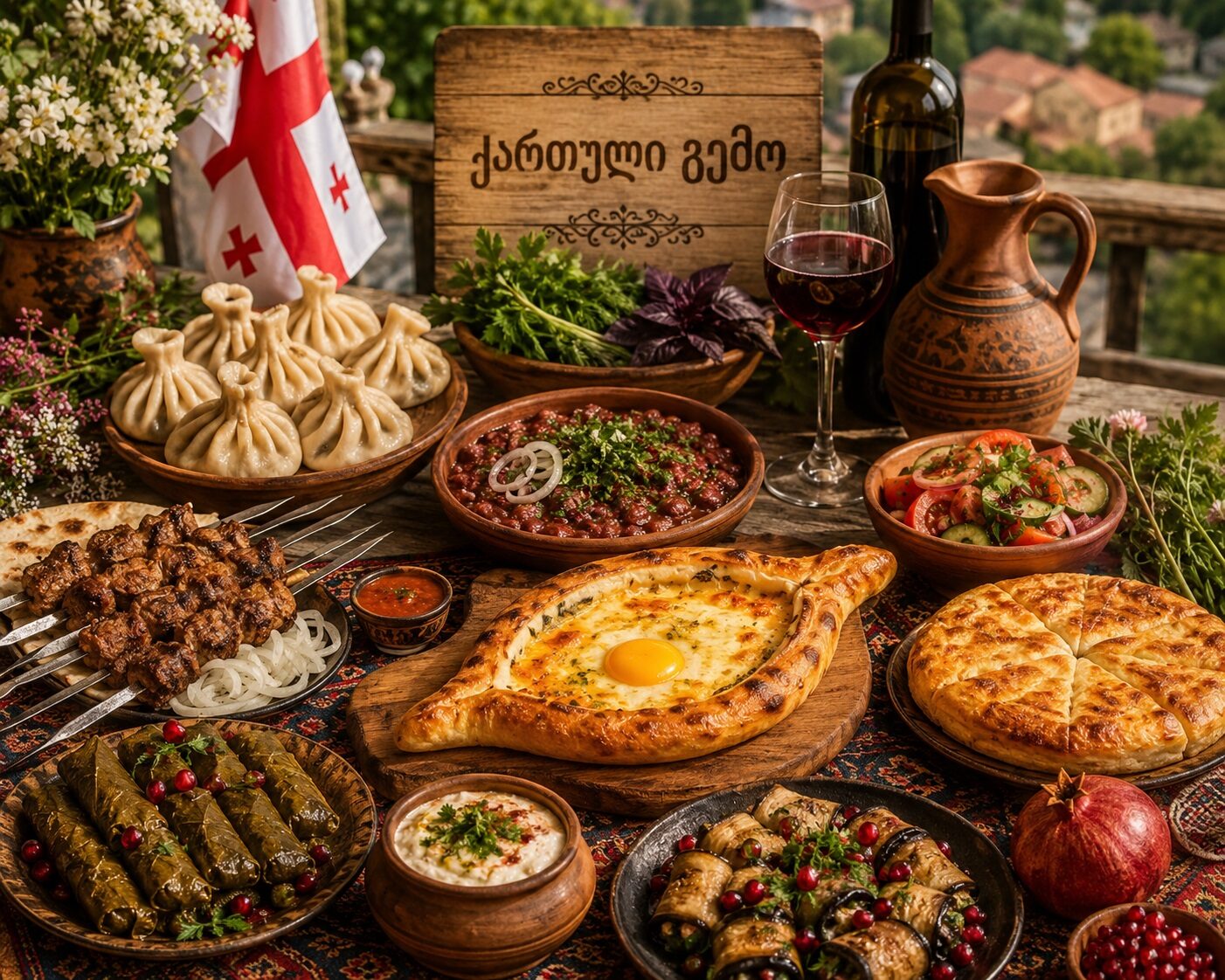
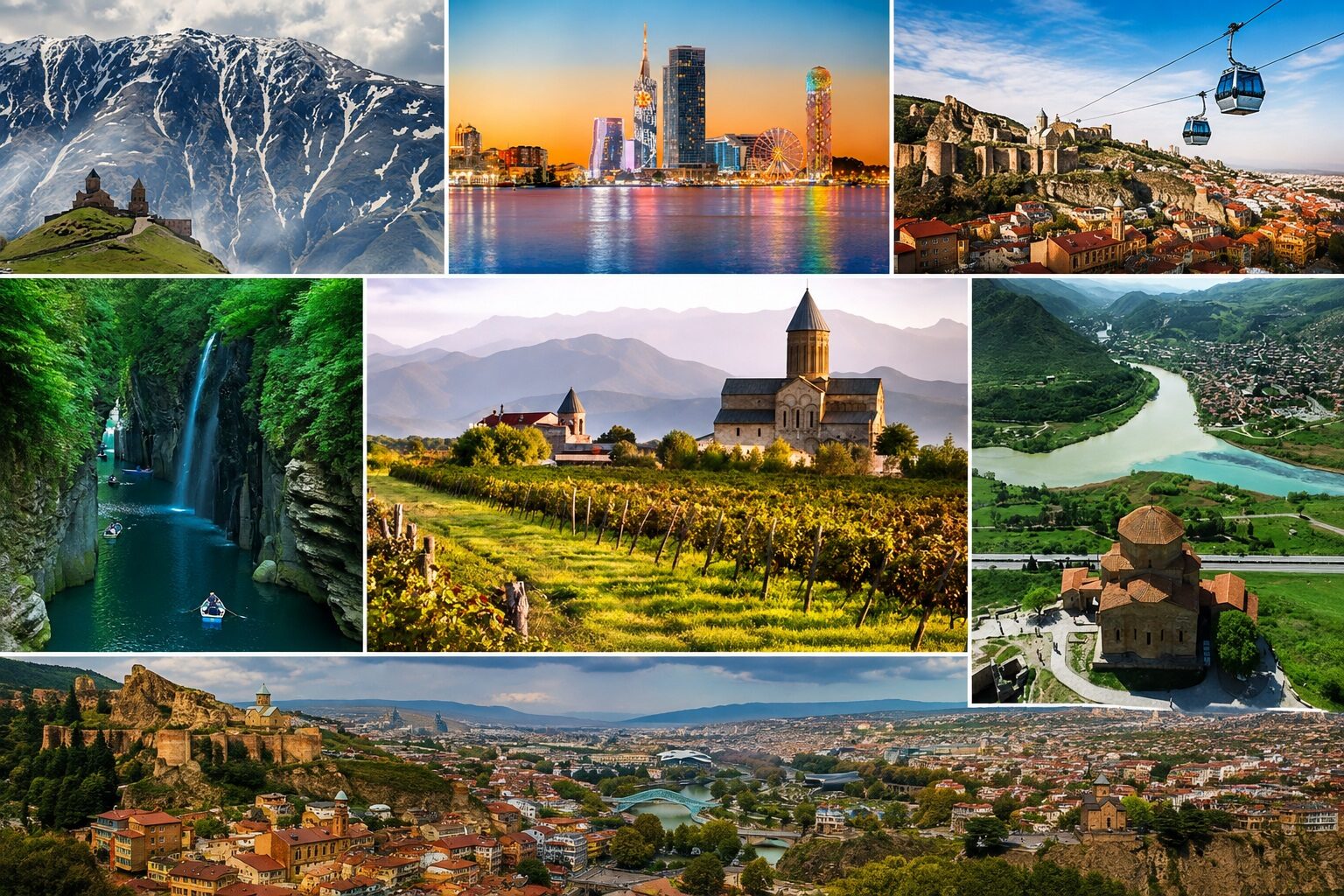
When I think about Georgia, I do not think only about the mountains, ancient churches, beautiful cities, the Black Sea or the vineyards of Kakheti. I also think about a Georgian table covered with freshly prepared food, warm bread, cheese, herbs, grilled meat, steaming khinkali and a glass of wine.
I am Tea Khvtisiashvili, and for me, Georgian food is one of the best ways to understand Georgia.
Food here is not simply something we eat when we are hungry. It is part of our culture, our hospitality, our family traditions and our regional identity. Almost every part of Georgia has dishes that tell a different story, and travelling from one region to another can feel like discovering a completely different side of Georgian cuisine.
That is why, when visitors ask me what to eat in Georgia, I never recommend trying only khinkali and khachapuri. Of course, these are two of the most famous Georgian dishes, and you absolutely should try them. But Georgian cuisine is much richer than that.
In this guide, I want to take you through the Georgian dishes I recommend trying, explain how they are traditionally eaten, talk about their history and regional traditions, share some of my own observations and show you where different foods are especially connected with Georgian regions.
If you are planning a trip to Georgia, I hope this guide will help you discover not only what to eat, but also why Georgian food is such an important part of travelling through our country.
GEORGIAN CUISINE AND GEORGIAN FOOD CULTURE
When I describe Georgian cuisine to someone who has never visited Georgia, I usually say that there is no single flavour that defines it.
Instead, Georgian food is a combination of many different traditions.
We use walnuts, fresh herbs, garlic, cheese, beans, vegetables, meat, corn, grapes and a wide variety of spices. Depending on the region, some ingredients become more important than others.
In western Georgia, you will often notice stronger use of herbs, walnuts, cheese and sometimes spicy flavours. In the mountains, the food tends to be hearty and filling. In Kakheti, wine and food are closely connected. In Adjara, the Black Sea and subtropical climate have influenced the local cuisine.
For me, this regional diversity is one of the most fascinating things about Georgian food.
You can travel only a few hours and suddenly find yourself eating something that looks and tastes completely different from what you had in Tbilisi.
WHY GEORGIAN FOOD IS SO SPECIAL
One of the things I love most about Georgian cuisine is that food is rarely treated as something purely individual.
A Georgian table is meant to be shared.
Instead of ordering one dish for one person, we often put several dishes in the middle of the table and everyone tries a little of everything.
There may be khachapuri, khinkali, vegetables, pkhali, cheese, meat, bread and several other dishes at the same time.
Then comes wine.
Then conversation.
Then a toast.
And very often, another plate of food appears.
This is why I believe that Georgian cuisine cannot be separated from Georgian hospitality.
The traditional Georgian supra is much more than dinner. It is a social experience where food, wine, conversation, friendship and tradition all come together.
WHAT TO EAT IN GEORGIA
If someone asks me what they should eat during their first trip to Georgia, I usually recommend trying a variety of dishes rather than concentrating on only one famous food.
- Of course, start with khinkali.
- Try Adjarian khachapuri.
- Try Imeruli khachapuri.
- Try mtsvadi.
- Try lobio.
- Try ajapsandali.
- Try pkhali.
- Try satsivi.
- Try kharcho.
And if you travel through Kakheti, definitely leave time for Georgian wine.
I also encourage visitors to try dishes they have never heard of before.
Some of the most interesting Georgian food experiences happen when you look at a menu and ask the waiter what is traditional in that particular restaurant or region.
KHINKALI — GEORGIAN DUMPLINGS
For me, khinkali is one of the first Georgian dishes every visitor should try.
These large Georgian dumplings are traditionally filled with meat, onions, spices and broth. There are also modern versions made with mushrooms, potatoes, cheese and other fillings.
The most important thing about traditional meat khinkali is the juice inside.
When a properly prepared khinkali arrives at the table, the filling should be juicy, and the broth inside becomes an essential part of the eating experience.
Khinkali are strongly associated with the mountain regions of Georgia, particularly the traditions of Pshavi, Mtiuleti and surrounding mountainous areas.
Over time, khinkali became popular throughout the country, and today you can find them in almost every Georgian city.
HOW TO EAT KHINKALI
This is one of the first things I explain to visitors who are trying khinkali for the first time.
Do not eat traditional khinkali with a fork.
Do not cut it open with a knife.
The traditional way is to eat it with your hands.
You carefully pick up the khinkali by the top part, take a small bite from the side and drink the hot broth inside.
After that, you continue eating the dumpling.
The technique may sound simple, but it takes a little practice.
The dumpling can be very hot, and the broth can easily spill if you are not careful.
For me, that is part of the experience.
One of the biggest mistakes a visitor can make is cutting the khinkali open and allowing all the broth to escape onto the plate.
The broth is one of the best parts.
KALAKURI KHINKALI
Kalakuri khinkali is one of the varieties you will commonly encounter in Tbilisi and other Georgian cities.
Compared with some mountain-style versions, kalakuri khinkali commonly contains fresh herbs together with meat, onion and spices.
The herbs give the dumpling a distinctive aroma and flavour.
I recommend trying both traditional meat khinkali and kalakuri khinkali if you have the opportunity because the difference is surprisingly noticeable.
KHINKALI IN THE MOUNTAINS
If you travel to Georgia's mountain regions, I recommend trying khinkali there as well.
Mountain food developed under very different conditions from city cuisine.
People needed filling dishes that could provide energy in a cold environment and support an active mountain lifestyle.
This is one reason why khinkali became such an important part of mountain culinary culture.
For me, eating khinkali in the mountains is not only about the food itself. It is also about understanding where the tradition came from.
KHACHAPURI — GEORGIA'S FAMOUS CHEESE BREAD
If khinkali is Georgia's famous dumpling, khachapuri is probably the country's most internationally recognized bread.
But I always tell visitors that there is no single Georgian khachapuri.
There are many regional varieties.
They have different shapes, different amounts of cheese and different preparation methods.
That is why I recommend trying several types during your trip.
ADJARIAN KHACHAPURI
Adjarian khachapuri, also called Acharuli khachapuri, is probably the most recognizable version.
It has a distinctive boat-like shape and is filled with melted cheese. It is traditionally finished with butter and an egg.
When it arrives at the table, I recommend mixing the egg and butter into the hot cheese.
Then I tear pieces of bread from the edges and dip them into the centre.
The combination of warm bread, melted cheese, butter and egg is incredibly satisfying.
For me, this is one of those dishes where the presentation is part of the experience.
HOW TO EAT ADJARIAN KHACHAPURI
I always recommend eating Adjarian khachapuri while it is hot.
First, mix the egg, butter and cheese together in the middle.
Then tear a piece from the edge.
Dip the bread into the cheese mixture.
Repeat.
There is no need for complicated utensils or techniques.
The traditional experience is simple, warm and social.
IMERULI KHACHAPURI
Imeruli khachapuri comes from Imereti and looks very different from the famous Adjarian version.
It is round, with cheese enclosed inside the dough.
For me, Imeruli khachapuri is one of the best versions for sharing around a table.
It is also a great choice if you want to try something traditional without the richer egg-and-butter combination of Adjarian khachapuri.
MEGRELIAN KHACHAPURI
Megrelian khachapuri comes from Samegrelo.
What makes it particularly interesting is the generous amount of cheese.
Cheese is used inside the dough and also on top.
If you are someone who loves cheese, this is one Georgian dish I would definitely recommend.
KHACHAPURI FROM DIFFERENT REGIONS
One of my favourite things about Georgian cuisine is discovering how one basic idea can become completely different from region to region.
The concept of bread and cheese sounds simple.
But in Georgia, it has developed into many different traditions.
In Adjara, you get the famous boat-shaped khachapuri.
In Imereti, you get the round Imeruli version.
In Samegrelo, you get a cheese-rich Megrelian version.
In other regions, you can discover even more local variations.
This is why I always recommend trying Georgian food according to the region you are visiting.
MTSVADI — GEORGIAN GRILLED MEAT
Mtsvadi is one of the Georgian dishes I recommend to people who love grilled meat.
Chunks of meat are cooked over an open fire, giving them a smoky aroma and rich flavour.
Mtsvadi is especially associated with outdoor meals, gatherings and Georgian hospitality.
Kakheti is particularly famous for its mtsvadi tradition.
For me, mtsvadi is not about complicated ingredients.
Good meat, fire, smoke, salt and the right atmosphere can be enough.
KHARCHO — A RICH GEORGIAN DISH
Kharcho is a hearty and aromatic Georgian dish.
Traditional versions can contain beef, walnuts, sour plum and spices, creating a deep combination of flavours.
When I want something warming and substantial, kharcho is one of the dishes I look for.
The balance between richness, acidity and spices is what makes it different from many other soups.
LOBIO — TRADITIONAL GEORGIAN BEANS
Lobio is one of the dishes I recommend to visitors who want to experience traditional Georgian food without always choosing meat.
Beans are cooked with herbs, spices and other ingredients that create a rich and comforting dish.
I particularly enjoy lobio with fresh Georgian bread and pickled vegetables.
It is simple food, but it represents something I appreciate about Georgian cuisine: you do not need expensive ingredients to create a memorable dish.
AJAPSANDALI — GEORGIAN VEGETABLE FOOD
Ajapsandali is a wonderful example of the vegetable side of Georgian cuisine.
Eggplant, tomatoes, peppers, onions and herbs come together to create a dish that is rich, aromatic and strongly associated with summer.
I recommend ajapsandali to visitors who arrive in Georgia expecting the cuisine to be mostly meat and cheese.
Georgian food is much more diverse.
Vegetables, beans, walnuts and herbs are extremely important.
SATSIVI — WALNUTS AND SPICES
Satsivi is one of the dishes that shows how important walnuts are in Georgian cooking.
It is traditionally associated with poultry served with a rich walnut-based sauce.
The sauce combines walnuts, spices and aromatic ingredients to create a distinctive Georgian flavour.
For me, satsivi is one of those dishes that immediately feels connected to Georgian cuisine.
ABKHAZURA — A TRADITIONAL MEAT DISH
Abkhazura is a traditional meat dish with a rich and savoury character.
It is an excellent choice for visitors who want to move beyond the most famous Georgian dishes.
I particularly like introducing less internationally known dishes because they give travellers the opportunity to discover something they may never have tried before arriving in Georgia.
GHOMI AND CHEESE
Ghomi is a traditional cornmeal dish strongly associated with western Georgia.
It has a thick and soft texture and is commonly served with Georgian cheese.
For me, ghomi is a perfect example of western Georgian food.
It is simple, filling and comforting.
When it is served hot with good local cheese, it becomes much more interesting than its simple ingredients might suggest.
PKHALI — GEORGIAN VEGETABLE AND WALNUT DISHES
Pkhali is one of the dishes I recommend ordering for the whole table.
Different vegetables and greens can be combined with walnuts, herbs and spices.
You can often find versions made with spinach, beetroot, beans and other vegetables.
I like ordering several types together because they bring different colours, textures and flavours to the table.
BADRIJANI NIGVZIT — EGGPLANT WITH WALNUTS
Badrijani nigvzit is one of the Georgian dishes I always recommend to visitors who enjoy walnuts and vegetables.
Thin slices of fried eggplant are filled or topped with a seasoned walnut mixture.
The combination of soft eggplant, walnuts, herbs and spices is very characteristic of Georgian cuisine.
It is also an excellent dish for sharing.
CHURCHKHELA — GEORGIAN SWEET
Churchkhela is one of the foods visitors often notice immediately when walking through Georgian markets.
It is traditionally made using nuts threaded onto a string and repeatedly dipped into thickened grape juice.
After drying, it becomes a firm, naturally sweet snack.
For me, churchkhela is interesting because it connects Georgian food with grapes and the country's agricultural traditions.
It is also easy to carry while travelling.
GEORGIAN CHEESE
Cheese has an important place on the Georgian table.
Sulguni is one of the best-known varieties, but there are many regional cheeses and different styles of preparation.
When I travel around Georgia, I recommend asking what local cheese is available.
Fresh cheese, aged cheese and smoked varieties can taste very different.
And of course, Georgian cheese becomes even more interesting when combined with fresh bread, vegetables and wine.
GEORGIAN BREAD
Bread is an essential part of Georgian food culture.
Fresh bread is often served alongside meals, and traditional baking methods are still used in many places.
Shotis puri is one of the breads visitors should try, especially when travelling through Kakheti.
For me, there is something special about eating bread while it is still warm.
Add some Georgian cheese, perhaps fresh herbs, and you already have a very satisfying snack.
WHICH REGION OF GEORGIA HAS THE BEST FOOD?
I am often asked which region has the best food in Georgia.
Honestly, I do not think there is one correct answer.
Every region has its own identity.
That is exactly what makes travelling around Georgia so interesting.
TBILISI — THE BEST PLACE TO START
Tbilisi is probably the easiest place to begin exploring Georgian cuisine.
The capital brings together dishes from many different regions.
You can find khinkali, different types of khachapuri, lobio, pkhali, satsivi, ajapsandali, mtsvadi and many other traditional foods.
You can also find modern interpretations of Georgian cuisine.
For a first visit, I recommend spending enough time in Tbilisi to understand the basics before travelling deeper into the country.
KAKHETI — GEORGIAN WINE AND TRADITIONAL FOOD
Kakheti is the region I immediately associate with Georgian wine.
The landscape is full of vineyards, and wine is deeply connected with everyday culture.
When I visit Kakheti, I recommend slowing down.
Visit a winery or family cellar.
Try local food.
Taste different wines.
Talk with the people who produce them.
Kakheti is not a region I would rush through.
For me, food and wine here are part of the destination itself.
IMERETI — IMERULI KHACHAPURI AND WESTERN GEORGIAN FOOD
Imereti is famous for Imeruli khachapuri, but there is much more to explore.
The region has a strong western Georgian culinary identity, with its own approach to herbs, cheese, vegetables and traditional dishes.
If you travel through Kutaisi and the surrounding areas, I recommend asking about local food rather than ordering only the dishes you already know.
ADJARA — ACHARULI KHACHAPURI AND THE BLACK SEA
Adjara offers a completely different atmosphere.
You have Batumi, the Black Sea, subtropical landscapes and mountain villages.
And, of course, you have Acharuli khachapuri.
For me, eating Adjarian khachapuri while exploring Adjara is one of those travel experiences that feels directly connected with the region.
SAMEGRELO — BOLD WESTERN FLAVOURS
Samegrelo is one of the regions I recommend to visitors who enjoy stronger flavours.
Megrelian food often makes generous use of cheese, walnuts, herbs and spices.
Megrelian khachapuri is only one example.
There are many other dishes worth discovering if you travel deeper into the region.
SVANETI — MOUNTAIN FOOD
Svaneti has developed its own distinctive food traditions because of its geography and history.
Mountain life influenced the types of ingredients available and the need for hearty food.
Svan salt is one of the region's best-known culinary products.
Kubdari, a meat-filled bread, is another dish strongly associated with Svaneti.
For me, eating local food in Svaneti is part of experiencing the mountain culture itself.
SAMTSKHE-JAVAKHETI — REGIONAL TRADITIONS
Samtskhe-Javakheti is another region where I recommend looking beyond the standard tourist menu.
The region has its own traditional dishes, breads and meat preparations.
If you are travelling to places such as Akhaltsikhe or Vardzia, ask about local food.
The more you travel around Georgia, the more you realize that there is no single version of Georgian cuisine.
GEORGIAN WINE — AN ANCIENT TRADITION
I cannot talk about Georgian food without talking about wine.
Wine has been connected with Georgian culture for thousands of years.
One of the most distinctive parts of this tradition is qvevri winemaking.
Qvevri are large clay vessels traditionally buried in the ground and used for fermentation, ageing and storing wine.
The traditional Georgian qvevri winemaking method is recognized by UNESCO as Intangible Cultural Heritage.
For me, what makes Georgian wine particularly fascinating is that this is not simply an ancient tradition remembered from history.
It remains a living practice.
Families, winemakers and communities continue to preserve traditional knowledge and methods.
QVEVRI WINE
Qvevri winemaking can create wines with flavours, textures and colours that may be very different from what many international visitors are used to.
One of the most interesting examples is Georgian amber wine.
White grapes fermented with extended skin contact can produce a deeper golden or amber colour and a very different structure from conventional white wine.
If you normally drink only modern European-style wines, I strongly recommend trying a Georgian qvevri wine at least once.
NATURAL WINE IN GEORGIA
Georgia is also becoming increasingly interesting for people who enjoy natural wine.
There are producers working with traditional methods, local grape varieties and minimal intervention.
What I like about visiting smaller wine producers is the connection between the wine and the place.
You can see the vineyard.
You can visit the cellar.
You can learn about the grapes.
Then you sit down and eat local food with the wine.
That experience is completely different from simply buying a bottle from a supermarket.
GEORGIAN GRAPE VARIETIES
Saperavi is one of the best-known Georgian red grape varieties.
Rkatsiteli is one of the country's classic white varieties.
Kisi and Mtsvane are also interesting varieties to discover, especially if you want to explore Georgian amber and white wines.
When tasting Georgian wine, I recommend asking not only which grape was used, but also how the wine was produced.
Was it made in qvevri?
How long was it in contact with the skins?
Was it made traditionally or using modern techniques?
These questions can make a wine tasting much more interesting.
WHAT TO DRINK WITH GEORGIAN FOOD
There is no single perfect drink for every Georgian dish.
Khinkali is commonly enjoyed with beer, particularly because of its hearty character.
Wine is naturally connected with many other Georgian dishes.
I particularly enjoy Georgian wine with cheese, walnuts, grilled meat and traditional breads.
In Kakheti, mtsvadi and local wine are a particularly natural combination.
With Georgian cheese and walnut-based dishes, amber wine can be especially interesting.
But sometimes the best pairing is simply whatever is already on the table.
GEORGIAN SUPRA — THE HEART OF HOSPITALITY
If I had to explain Georgian hospitality using one image, I would describe a supra.
Imagine a long table.
- Fresh bread.
- Cheese.
- Khachapuri.
- Khinkali.
- Meat.
- Vegetables.
- Walnuts.
- Wine.
And people talking for hours.
The supra is not about eating quickly.
It is about staying together.
The tamada leads the traditional toasts, and the meal becomes a social and cultural experience.
This is why I believe visitors should experience Georgian food around a real Georgian table whenever they have the opportunity.
HOW TO ORDER FOOD IN A GEORGIAN RESTAURANT
If this is your first Georgian meal, I recommend ordering several dishes for the table.
You could start with pkhali and badrijani nigvzit.
Then order khinkali.
Add one or two types of khachapuri.
Choose a meat or vegetable dish.
Add fresh bread and cheese.
If you enjoy wine, choose a Georgian bottle or ask the restaurant what local wine they recommend.
This way, you experience several different flavours instead of spending your entire meal on one dish.
GEORGIAN FOOD FOR VEGETARIANS
Georgia is a surprisingly good destination for vegetarians.
Some of the dishes I recommend include lobio, ajapsandali, pkhali, badrijani nigvzit, lobiani, vegetable salads with walnuts and several types of khachapuri.
The exact ingredients can vary between restaurants, so if you have strict dietary requirements, always ask about the preparation.
But generally, Georgian cuisine offers a huge variety of vegetable, bean, walnut and cheese-based dishes.
GEORGIAN FOOD FOR MEAT LOVERS
If you love meat, you will have plenty to choose from.
Mtsvadi is an obvious starting point.
Then you can try meat-filled khinkali, chashushuli, chakhokhbili, shkmeruli, kuchmachi and different regional preparations.
I recommend trying different cooking methods.
Grilled meat tastes completely different from meat cooked slowly in a sauce.
Walnuts, herbs and spices can transform the flavour again.
That variety is one of the reasons I never get bored with Georgian food.
GEORGIAN FOOD FOR CHEESE LOVERS
Georgia is an excellent destination for cheese lovers.
Khachapuri alone gives you several different experiences.
Then there is sulguni and many regional varieties.
I recommend ordering local cheese with fresh bread and trying it with Georgian wine.
Sometimes the simplest Georgian snack can become one of the best parts of the meal.
THE STORIES AND LEGENDS OF GEORGIAN FOOD
Georgian food is surrounded by stories.
Some have historical foundations.
Others have been passed down as legends.
I think it is important to distinguish between the two.
When I tell visitors about Georgian food traditions, I prefer to explain when something is documented history and when it is a traditional story or interpretation.
That does not make the legend less interesting.
In fact, I think legends are part of what makes food culture memorable.
Khinkali, for example, has different theories about its development and origin, while its connection with Georgia's mountain regions is an important part of its cultural identity.
Food becomes much more interesting when you understand the people and places behind it.
WHY REGIONAL FOOD MATTERS
One of my biggest recommendations to visitors is not to spend the entire trip eating in Tbilisi.
Tbilisi is an excellent place to begin.
But Georgia becomes even more interesting when you travel.
Try food in Kakheti.
Try khinkali in the mountains.
Try Imeruli khachapuri in Imereti.
Try Acharuli khachapuri in Adjara.
Try Megrelian dishes in Samegrelo.
Try local food in Svaneti.
The differences may surprise you.
This is why I see Georgian cuisine almost like a map.
Every region adds another piece to the story.
A FOOD-FOCUSED TRIP AROUND GEORGIA
If I were planning a food-focused trip around Georgia, I would start in Tbilisi.
From there, I would travel to Kakheti for wine and traditional food.
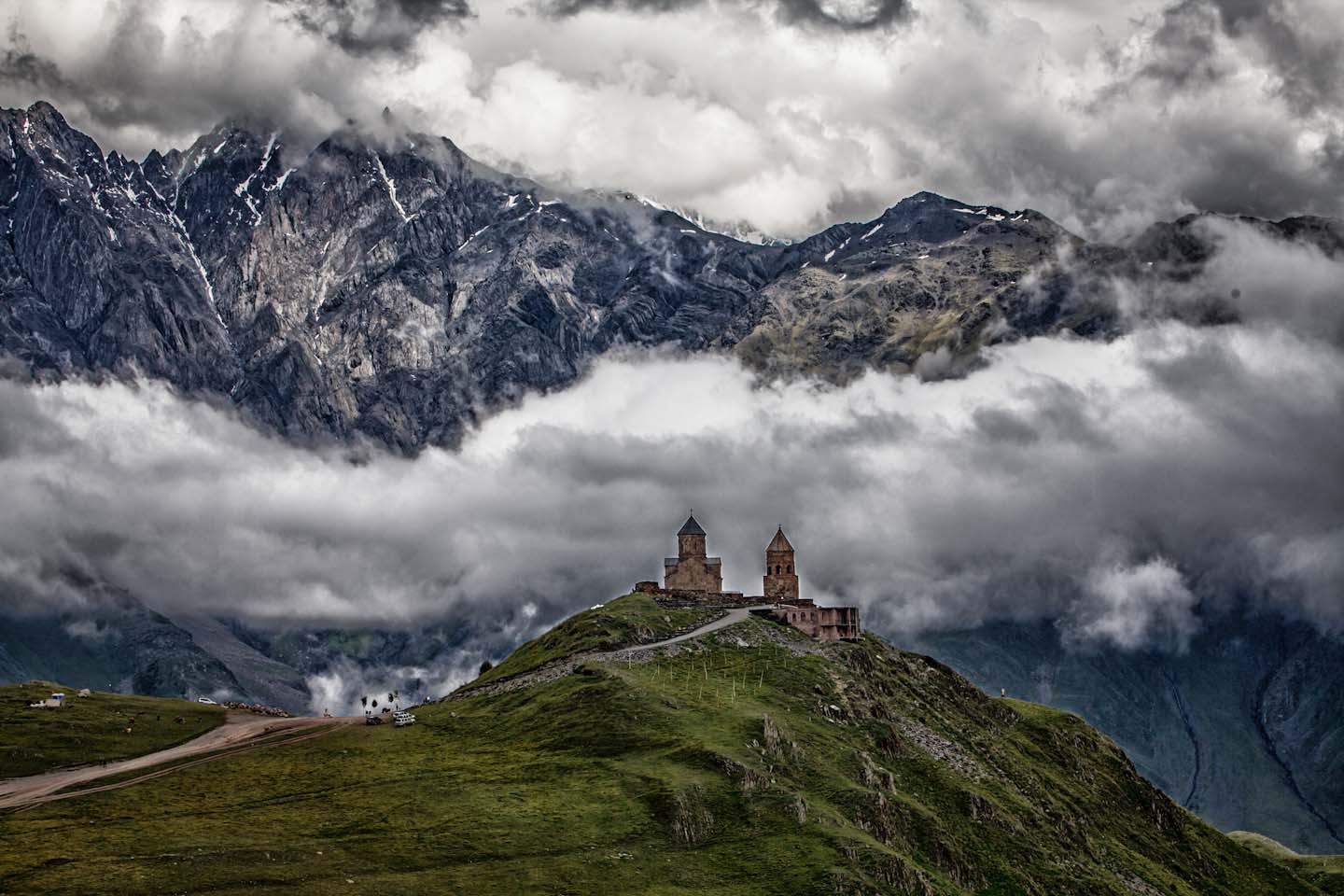
Then I would head north toward the mountains and experience the atmosphere around Kazbegi.
After that, I would travel west toward Kutaisi and explore Imeretian cuisine.
Finally, I would continue toward Batumi and Adjara for Acharuli khachapuri and the Black Sea atmosphere.
If time allows, I would add Samegrelo or Svaneti.
This kind of journey allows the food to change together with the landscape.
And for me, that is one of the best ways to travel through Georgia.
TRAVEL AROUND GEORGIA WITH SAFETRIP
When I recommend travelling between different food regions, transportation becomes an important part of the experience.
Georgia is relatively compact, but the roads between regions can take several hours, and public transportation is not always the most convenient option when you want to stop along the way.
At SafeTrip, we provide private transfers and trips between many destinations across Georgia.
If you want to combine sightseeing with food experiences, travelling by private car allows you to move between regions comfortably and build your journey around the places you actually want to visit.
You can travel from Tbilisi to Kakheti for wine and traditional food, continue toward Kazbegi for mountain scenery and khinkali, travel toward Kutaisi to explore western Georgian cuisine, or continue to Batumi and Adjara.
For me, the journey itself should be part of the experience.
You should be able to stop when you discover an interesting place, take your time and enjoy Georgia rather than simply rushing from one destination to another.
You can explore SafeTrip's transfers, trips and destinations directly through the website and choose the route that works best for your journey.
MY PERSONAL FAVOURITE GEORGIAN DISHES
If someone asks me to choose the Georgian dishes I would recommend first, my personal list would be:
- Khinkali.
- Adjarian khachapuri.
- Imeruli khachapuri.
- Megrelian khachapuri.
- Mtsvadi.
- Ajapsandali.
- Lobio.
- Kharcho.
- Satsivi.
- Ghomi with cheese.
But I never tell visitors to stop with a list.
The best food experiences often happen when you order something you have never heard of before.
Ask what the locals are eating.
Ask what is traditional in that region.
Ask what was cooked fresh that day.
That is how you discover something new.
10 THINGS I WANT EVERY VISITOR TO KNOW ABOUT GEORGIAN FOOD
DO NOT EAT KHINKALI WITH A FORK
Use your hands and try to keep the broth inside.
TRY MORE THAN ONE TYPE OF KHACHAPURI
Adjarian, Imeruli and Megrelian khachapuri are very different experiences.
GEORGIAN FOOD IS NOT ONLY MEAT
Vegetables, beans, walnuts, herbs and cheese are extremely important.
TRY FOOD OUTSIDE TBILISI
Regional cuisine is one of Georgia's greatest strengths.
VISIT KAKHETI FOR WINE
If you love wine, Kakheti should be part of your itinerary.
TRY QVEVRI WINE
It is one of the most distinctive parts of Georgian winemaking.
SHARE YOUR FOOD
Georgian cuisine is designed beautifully for a shared table.
ASK ABOUT LOCAL DISHES
You may discover something that is not famous internationally.
DO NOT RUSH THE MEAL
Georgian food is connected with hospitality and conversation.
TRY SOMETHING YOU HAVE NEVER HEARD OF
This is often where the best memories begin.
FREQUENTLY ASKED QUESTIONS ABOUT GEORGIAN FOOD
WHAT IS THE MOST FAMOUS GEORGIAN FOOD?
Khinkali and khachapuri are probably the two most internationally recognized Georgian dishes. However, Georgian cuisine includes many other traditional foods such as mtsvadi, lobio, satsivi, ajapsandali, kharcho, pkhali and many regional specialties.
WHAT SHOULD I EAT IN GEORGIA FOR THE FIRST TIME?
I recommend starting with khinkali, Adjarian khachapuri, Imeruli khachapuri, mtsvadi, lobio, ajapsandali and pkhali.
IS GEORGIAN FOOD SPICY?
Some Georgian dishes can be spicy, particularly in western Georgia, but Georgian cuisine is not generally based on extreme heat. Herbs, walnuts, garlic, spices and fresh ingredients are often more important for flavour.
HOW DO YOU EAT KHINKALI?
Traditional khinkali are eaten by hand. Hold the dumpling by the top, carefully bite the side and drink the broth inside before continuing to eat the dumpling.
CAN YOU EAT KHINKALI WITH A FORK?
You can physically eat them with a fork, but it is not the traditional way. I strongly recommend eating traditional khinkali by hand so you can keep and enjoy the broth inside.
WHAT IS THE BEST REGION FOR GEORGIAN WINE?
Kakheti is the region I recommend first to visitors interested in Georgian wine. It is one of the country's most important wine-producing areas and is strongly associated with traditional winemaking.
WHAT IS QVEVRI WINE?
Qvevri wine is produced using traditional Georgian clay vessels called qvevri. The traditional method is one of the most important parts of Georgia's winemaking heritage.
IS GEORGIAN FOOD GOOD FOR VEGETARIANS?
Yes. Lobio, ajapsandali, pkhali, badrijani nigvzit, lobiani, salads with walnuts and several types of khachapuri can all be good choices, although ingredients should always be checked if you have strict dietary requirements.
WHAT IS THE BEST GEORGIAN DISH?
There is no single answer. For me, khinkali, Adjarian khachapuri, Imeruli khachapuri, mtsvadi, ajapsandali and lobio are among the dishes I recommend most often.
WHAT IS THE BEST PLACE TO TRY GEORGIAN FOOD?
Tbilisi is the easiest place to start because you can find food from many regions of Georgia. But I always recommend travelling outside the capital and trying regional dishes where their traditions developed.
FINAL THOUGHTS — TASTE GEORGIA, NOT JUST SEE IT
When I think about the best way to experience Georgia, I do not think only about sightseeing.
I think about arriving in a new region and asking what the local food is.
I think about fresh bread.
A plate of khinkali arriving at the table.
The smell of mtsvadi cooking over a fire.
A hot Adjarian khachapuri with melted cheese, butter and egg.
Walnuts and herbs.
A glass of amber wine.
A long conversation.
Another toast.
And another plate of food appearing when you were certain there was no space left on the table.
That is Georgia for me.
Georgian cuisine is not simply a collection of recipes.
It is geography.
It is history.
It is agriculture.
It is family tradition.
It is wine.
It is hospitality.
And it is memory.
That is why I believe that if you really want to understand Georgia, you should not only see the country.
You should taste it.
Travel through the regions.
Try local food.
Visit Kakheti for wine.
Try khinkali in the mountains.
Taste different kinds of khachapuri.
Explore western Georgian cuisine.
Talk to local people.
And leave some room for something you have never tried before.
Because after all the mountains, churches, cities, beaches and ancient places, one of the strongest memories you take home from Georgia may be something much simpler.
The taste of a Georgian table.
And if you want to experience those different regions comfortably, SafeTrip can help you travel between destinations by private transfer and plan your journey around the places and experiences that interest you most.
Georgia is a country you can see with your eyes.
But to truly understand it, I believe you should taste it too.
Comments (0)
Be the first to leave a comment.
Leave a comment